
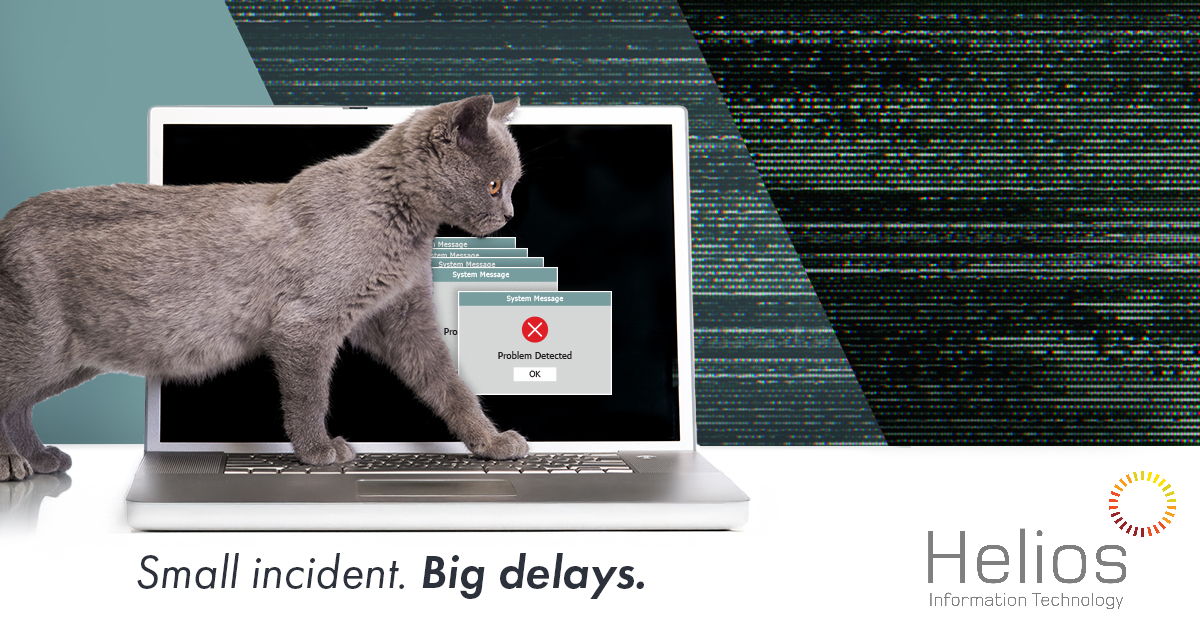
When you think of downtime, you may picture storms, power failures, data breaches, or cyberattacks. While these occur, they are not the main reasons work usually stops.
In practice, downtime is seldom marked by dramatic events. More often, it arises from minor and routine issues that may initially appear insignificant yet can halt operations entirely. Such understated challenges frequently prove to be the most disruptive to daily productivity.
Brief interruptions can quickly affect your profits. Delayed projects or decisions may result in missed opportunities and dissatisfied customers. The main cost is the time wasted as your team waits for solutions.
What are the common reasons for downtime?
Here are some common situations that disrupt business.
Incident Involving Spilled Coffee
Everything changes in a split second.
A drink spills on a laptop.
The screen flickers, then turns off.
The device is unable to power on again.
Operations are halted without warning. The employee in question loses access to emails, project files, and calendar appointments. Colleagues pause while determining the appropriate steps forward. Concerns arise regarding data loss and the possibility of recovery. Projects are delayed, deadlines shift, and team members await further instructions.
An unexpected incident may significantly delay an individual’s productivity for an extended period if recovery is not prompt. The primary concern lies not with the spilled coffee itself, but rather with the substantial time lost addressing its consequences.
Accidental deletion
A key file is deleted or overwritten with incorrect data, and the error goes unnoticed until the file is needed for a client or report.
After that, the hunt starts. Hours slip away sifting through emails, shared drives, and outdated folders. As time runs out, anxiety rises. In the end, your team faces a choice: redo the work entirely or inform the customer of a delay.
A minor error can cause lengthy delays, turning a quick task into an hours-long process. The setback comes from the challenge of recovery, not the mistake itself.
The update that did not proceed as intended.
Routine maintenance is a normal aspect of running a business. You might install a software update or the latest security patch, expecting the process to be fast and straightforward. However, issues can arise—a program may start acting up or the system might fail to load as expected.
Work is interrupted while the individual responsible for the update, or a colleague they consult, investigates the problem. A task initially expected to take five minutes escalates into an extensive analysis lasting several hours.
The real problem is not a failed update, but the lack of a fast way to restore operations, which can turn simple maintenance into prolonged downtime.
Outdated equipment that eventually fails.
Hardware has a finite lifespan. Over time, devices experience reduced performance and reliability. Eventually, even longstanding computers or servers will reach the end of their operational life. While such outcomes are expected, the precise timing is difficult to anticipate.
At this point, attention moves away from what went wrong and turns toward how to bounce back. Questions arise about the timeline for replacing the machine and recovering software and data. Meanwhile, tasks start accumulating, phone calls remain unanswered, and orders are put on hold until the problems are resolved.
Downtime is not necessarily a direct consequence of aging equipment; rather, it results from prolonged recovery periods following equipment failures. These delays can negatively impact business operations.

Key Point: Operations are halted when individuals are awaiting action.
In each of the examples mentioned above, the outcomes are identical.
Individuals are unable to perform their work duties.
Decision-making processes are delayed.
Clients are waiting.
Momentum has stopped.
A lengthy recovery period can result in increased costs and damage to a company’s reputation.
Downtime should be regarded primarily as a business issue rather than merely a technological concern. Incidents such as spilled coffee or unintentional file deletion are common occurrences, while updates and aging hardware are unavoidable aspects of operations. The critical consideration for any organisation is determining the appropriate course of action in response to such events.
The Impact of Rapid Recovery on Organizational Performance
It is unrealistic to think you can avoid all problems because issues are bound to happen. Instead, the main objective is to resume operations smoothly and efficiently whenever setbacks occur.
This discussion pertains not to fear or intricate technology but to practical resilience. Rapid recovery ensures that minor issues are quickly resolved and easily overlooked. If a file can be restored within minutes or employee resumes work on a new device in under an hour, the incident becomes inconspicuous.
Rapid recovery enables uninterrupted workflow.
There is no impact on customers.
The team maintains a low level of stress.
You keep the incident from escalating into a major problem, making it just a minor setback instead.
Restarting your team is far more important than dwelling on past mistakes.
Ensure business operations continue smoothly, eliminating downtime concerns.
If you are unsure about your business’s recovery time from these issues, contact us.