
You need your perfect-fitting, confidence-boosting jacket for the party.
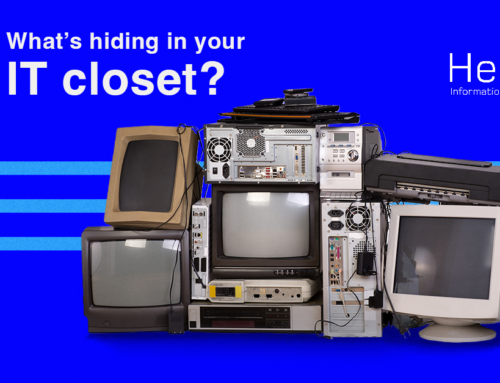
Upon opening your closet, the jacket is not immediately accessible due to an excess of items. Consequently, you opt to purchase an additional jacket, addressing the immediate need but failing to resolve the underlying issue—the disorganisation within your closet.
Businesses frequently struggle with evaluating their technology ROI.
Whenever productivity declines or progress slows, the usual reaction is to buy another tool, platform, or solution promising enhancement. People often think that having more advanced options will automatically lead to better outcomes.
As time passes, systems tend to accumulate components. While each addition was originally justified and continues to serve its intended function, these elements are seldom eliminated or replaced.
Although the technical infrastructure appears robust from an external perspective, working within it often feels more complicated than expected. Employees frequently debate task assignments, routine jobs take more time than planned, and even minor adjustments demand unnecessary levels of coordination.
Return on investment is not necessarily achieved through subsequent purchasing decisions; it can often be realised by eliminating existing obstacles.
Decluttering drives tangible ROI
Technology clutter does not usually lead to major failures, just minor, ongoing delays that often go unnoticed.
It appears as unnecessary steps, interruptions, and confusion that waste time and focus.
Decluttering streamlines technology, making work easier by reducing obstacles.
Individuals are aware of their destinations and the systems they can depend on. Expenses are more straightforward to monitor, enabling issues to be identified sooner while they remain addressable. Organising efforts seems more stable due to a reduction in concealed dependencies.
Technology ROI goes beyond finances. Simplifying things yields measurable ROI in five key areas.

ROI area #1: Time reclaimed
When tools overlap or workflows lack clarity, employees experience incremental time loss. They transition between platforms, verify data redundantly, and devise temporary solutions to maintain productivity throughout the workday.
By decluttering, you eliminate unnecessary steps.
Clearly identifying the location of work enhances task efficiency, streamlines onboarding processes, and facilitates smoother project progression.
Saving just a few minutes per employee each day can accumulate into significant hours for the entire organisation. The benefits of reclaimed time increase progressively.
ROI area #2: Reduced costs
Technology clutter masks hidden costs, such as unused licenses, redundant tools, and outdated systems.
Unexpected expenses may arise due to systems that are either obsolete or not thoroughly understood.
Decluttering helps manage expenditures effectively. It eliminates unnecessary purchases, minimises the likelihood of urgent repairs, and enhances transparency and predictability in financial costs. This approach prevents financial resources from being allocated to areas that no longer contribute value.
ROI area #3: Lower risk and fewer surprises
Complex systems generate uncertainty, as the relationships between individual components are not always evident. When dependencies remain ambiguous, minor adjustments may introduce significant risks and lead to extended problem resolution times.
Streamlining the environment helps minimise blind spots. By reducing system overlaps, it enhances clarity of ownership and enables more effective management of daily operations.
Predictability, often undervalued in technology investments, is among the most useful outcomes. Predictable systems make planning safer and speed up decision-making.
ROI area #4: Better decisions and growth readiness
Leaders make smarter choices when they understand the big picture. If your tech setup is unclear, scaling, hiring, and expanding operations become risky and unpredictable.
Uncertainty hinders progress.
Decluttering builds confidence and promotes growth. Knowing your business’s essentials allows you to plan with greater certainty.
ROI area #5: Happier, more productive teams
Technology influences daily team workflows. Cluttered systems cause frustration, distract from meaningful tasks, disrupt work, and drain energy managing complexity instead of adding value.
Technology enables teams to perform at their best, delivering valuable benefits to businesses.
What decluttering your tech is and is not
Optimising your technology is not an abrupt overhaul. It does not require beginning from nothing or interrupting established systems that are functioning effectively.
The process involves taking a step back to assess your current resources, streamlining areas where systems intersect, arranging what is left in an orderly way, and eliminating anything that does not benefit the business anymore.
Incremental enhancements can yield significant benefits. When tools are optimised for clarity and alignment, workflow efficiency increases and decision-making is strengthened.
Decluttering brings clarity, not chaos.
Where the ROI really starts
Spring cleaning begins by checking your closet; technology ROI starts with understanding existing assets. Before purchasing anything new, first get clear visibility into what you already have.
Leaders often find greater returns by simplifying rather than adding more. You cannot measure gains from clutter you have not addressed.
Book a 10-minute call to learn how simplification can boost your ROI.